
Sometimes, I feel like there’s a voice deep inside my mind that is constantly criticizing me. This voice has many faces. Sometimes it sounds like my colleagues, projecting their expectations onto me. Other times, it’s a stranger in the street who sneers at me for whatever reason, or even myself.
We all have goals and dreams that we want to achieve in life, and sometimes, it’s easy to underestimate how much of an impact our own attitudes and behaviors can have on making these realities. We may self-sabotage, whether consciously or unconsciously, and prevent ourselves from achieving what we truly desire. We may procrastinate, criticize ourselves, or make excuses for why we can’t do something. Over time, this behavior can become a pattern that keeps us from reaching our goals and achieving our full potential.
This can be frustrating and disheartening, but the good news is that it is possible to overcome self-sabotage. In this post, I’ll be sharing some tips on how to do just that.
There are different forms of self-sabotage and varied circumstances in which it manifests. For some, it might be skipping workouts or binging on junk food despite wanting to lose weight. For others, it might be avoiding difficult conversations or opportunities for growth at work. The bottom line is that self-sabotage is an obstacle that prevents us from reaching our full potential.

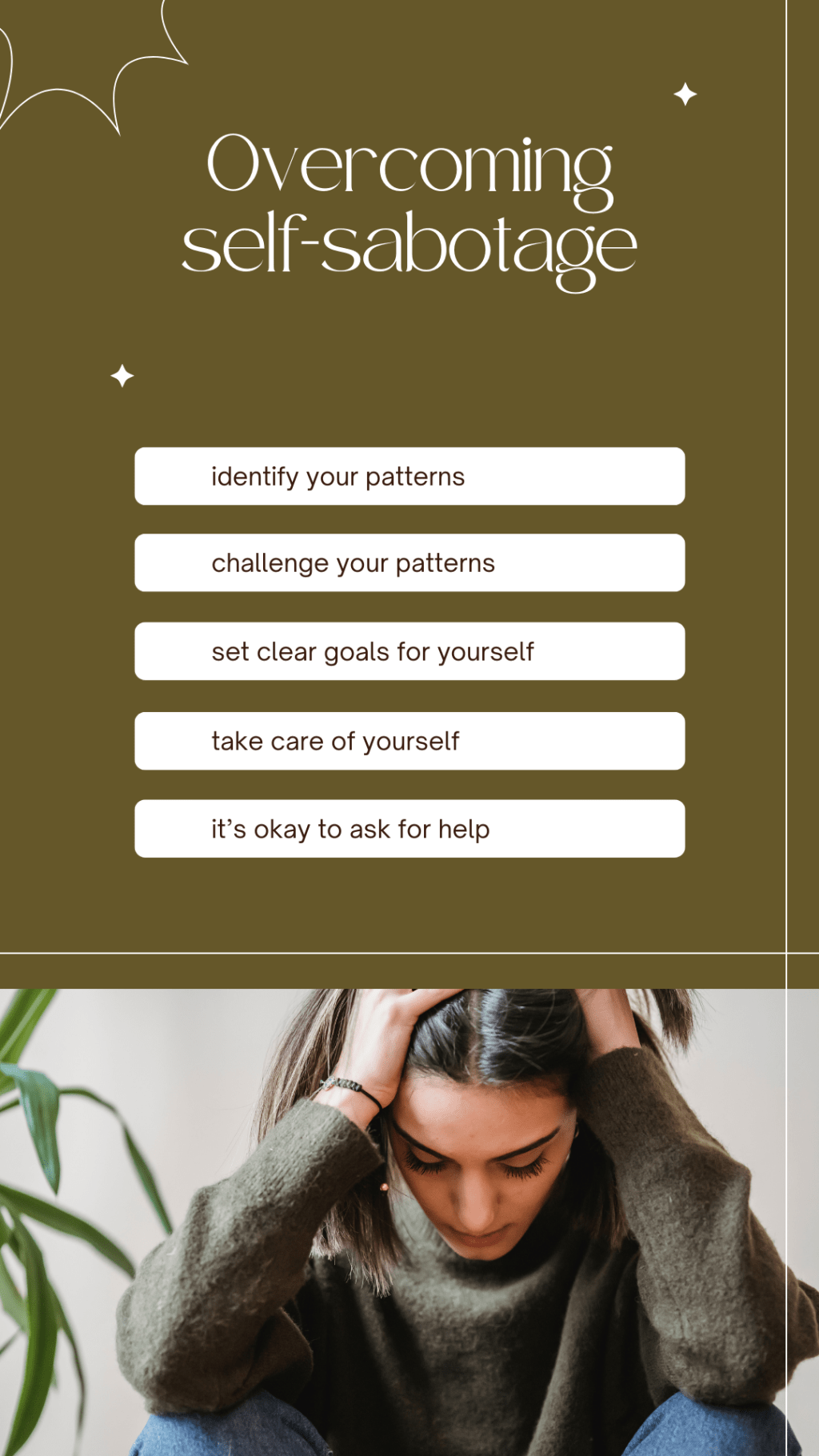
To overcome self-sabotage, first, identify your patterns. Self-sabotage can be a difficult behavior to overcome, but an important start is to take note of the situations where you tend to engage in self-sabotaging behavior. Once you understand the underlying reasons for your self-sabotage, you can start to make changes in how you think and act. What triggers these behaviors? Are there any commonalities? Understanding your patterns can help you recognize self-sabotage and prevent it.
Once you’ve identified your self-sabotaging behaviors, it’s important to challenge them. Identify the reasons for your behavior, and ask yourself whether it’s really serving you. Often, self-sabotage comes from a place of fear or self-doubt, and by challenging these negative thoughts, you can start to reframe them in a more positive light.
Additionally, you can overcome self-sabotage by setting clear goals for yourself. A clear vision of what you want to accomplish helps you remain focused and motivated. Instead of setting unrealistic goals with the potential to set you up for failure and trigger self-sabotage, consider setting realistic goals that are both challenging and achievable. To make it more manageable, break what you want to do down into smaller tasks, and celebrate your progress along the way. By focusing on what you’re accomplishing, rather than what you’re not, you’ll be less likely to engage in self-sabotaging behavior.
Taking care of yourself is crucial when you’re working to overcome self-sabotage. Make sure you’re sleeping well, eating healthy, and exercising consistently. Show compassion and grace to yourself when you make mistakes and deviate from your goals. Self-care can help you stay focused and motivated, as well as improve your general well-being.
Finally, it’s okay to ask for help. Reach out to someone you can trust – a friend, family member, or therapist – about your struggles. They can offer support, encouragement, and perspective to help you overcome self-sabotage. It can be difficult to open up about our struggles, but it’s important to remember that asking for help is a sign of strength. Remember, you don’t have to go through this alone.
Self-sabotage can be a tough obstacle to overcome, but it’s important to remember that you’re not alone. We all struggle with it from time to time. By implementing the tips we discussed, you can start making progress toward living your best life. Be kind to yourself, take it one step at a time, and don’t forget to celebrate your successes along the way. You’ve got this!
 Perfect Blemish
Leave a comment